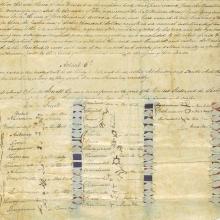
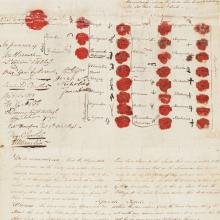
This treaty ended the Northwest Indian War (1785-1795) by creating a dividing line through Ohio between Indian Territory and the United States. Also called the Treaty of Greenville.
A treaty ceding 4.6 million acres in northwestern Ohio, northeastern Indiana, and southern Michigan. The treaty reserved 12 acres near Upper Sandusky, Ohio, for the Wyandot. Also called the Treaty of Maumee Rapids, or the Treaty of Fort Meigs.
This treaty established peace between the United States and tribal nations in the Ohio Valley following the War of 1812. Also called the Treaty of Springwells.
The second Treaty of Greenville negotiated peace between rival nations and established alliances with the United States against the British in the War of 1812. Also called the Second Treaty of Greenvile.
A treaty with the Wyandot, Chippewa, Ottawa, Potawatomi, and Shawnee negotiating for the right of way to construct roads and American settlements between Ohio and Michigan Territory. Also called the Treaty of Brownstown.
A treaty negotiating a land cession in southeast Michigan and northwest Ohio and establishing new reservation boundaries. The U.S. agreed to pay annuities and build six mills for the Wyandot nation. Also called the Treaty of Detroit.
This treaty ceded land in the Ohio Country. In exchange for an annuity, the Wyandot and other signatory nations agreed to relocate the eastern boundary of the Northwest Indian Territory 120 miles further west. Also called the Treaty of Fort Industry.
This treaty extended the terms of peace and friendship over the Potawatomi and Sac nations. It reaffirmed Wyandot control over lands, and placed several crimes under federal and state jurisdiction. Also called the Treaty of Fort Harmar.